


long-term side effects of hep b vaccine: There have been extensive years of research on hepatitis B virus (HBV) infection prevention through the use of the hepatitis B vaccine.HBV infection may lead to chronic liver damage and subsequently can lead to liver cirrhosis & liver cancer. As with all medicine and vaccines, there are certain risks of adverse effects, but in general, the majority are slight and transient, with no or temporary therapy.
An apparent question in people’s minds can be whether taking the hepatitis B vaccine will result in a chronic disease or long-term side effects; it does make sense to worry when a person has a health condition a few weeks to months after vaccination has been taken. However, an event occurring after vaccination does not necessarily mean it is due to the vaccine. There are large monitoring systems and studies designed to detect an association if it is there.
Table of Contents
What Is the Hepatitis B Vaccine?
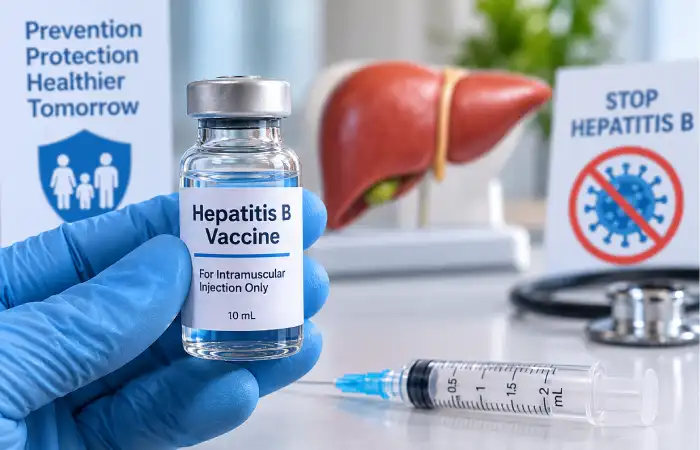
This is a preventative vaccine that works by ‘teaching your immune system to recognize the Hepatitis B virus but not to allow itself to be infected with Hepatitis B virus simultaneously’.
It contains the Hepatitis B surface antigen- not the Hepatitis B virus, which is alive- an non-infective protein from it.
People must be vaccinated against Hepatitis B, because Hepatitis B virus infection generally becomes chronic. If infection persists over time, your liver could become so damaged that it causes liver cancer and cirrhosis. WHO stated that it provides “safe and effective prevention [against infection]”.
If your body’s immune system reacts correctly to vaccination, your body will be able to provide a protective shield against infection for years, possibly decades. According to the CDC, vaccinations against Hepatitis B given to infants may give protective effects lasting 30 years.
Are There Long-Term Side Effects of the Hepatitis B Vaccine?
Most people do not experience any identifiable pattern of long-term side effects following hepatitis B immunization.
Side effects that are often attributed to immunization typically occur quite soon after it has been received. Typical examples include pain, redness, and swelling in the injection arm and headache, tiredness, and low-grade fever. These resolve within a period.
When some medical condition is identified in some individuals shortly after immunization, this can sometimes cause them to worry about cause and effect. Simply stating that a diagnosis has been made after immunization does not show the vaccine was the cause. Problems do arise in any given population all the time.
Comparison: Short-Term Reactions vs. Long-Term Concerns
| Possible effect | What is known |
| Sore arm | Common and usually temporary |
| Redness or swelling | Usually mild and short-lived |
| Headache | Can occur after vaccination |
| Fatigue | Generally temporary |
| Mild fever | Usually resolves quickly |
| Severe allergic reaction | Very rare but medically important |
| Chronic autoimmune disease | No established causal link |
| Multiple sclerosis | Studies have not demonstrated a causal association. |
| Long-term neurological disease | No established causal relationship |
CDC data report injection-site pain in approximately 3%–29% of recipients, fever in about 1%–6%, and headache in about 3%.
What About Autoimmune Diseases?

An autoimmune disease is a disease in which a human’s own tissue is attacked by the human’s immune system. Vaccination triggers the immune system, so some have theorized that immune triggering would ‘tip off’ the human’s immune system to attacking the human’s tissue.
This is something that has been examined. Conditions like rheumatoid arthritis, MS, GBS, optic neuritis, and other neurological or autoimmune diseases have been reported after receiving the hepatitis B vaccine. But to note, an event that has been reported as occurring is not the same as an event proven to be caused by the vaccine.
CDC acknowledges in its findings that no causal link could be made between the hepatitis B vaccine and chronic diseases.
Actually, a big difference is made, as although people acquire diseases regardless of whether they were vaccinated or not, it compares the vaccination and non-vaccination groups and whether they have a disease or not.
Can the Hepatitis B Vaccine Cause Neurological Problems?
Neurological disorders were also studied by vaccine-safety researchers. Symptoms of Guillain-Barré disease, optic neuritis, and other neurological disorders after vaccination have been reported. However, no cause-and-effect relationship was detected by available studies between chronic neurological disorders and the hepatitis B vaccine.
This does not suggest that any post-vaccinal symptoms should be discarded. Persistent or atypical symptoms merit further medical workup, especially if it is disabling or progressive.
It can be stated that, after vaccination, signs of medical attention may reflect signs not attributed causally to the vaccine.
What Is the Most Serious Known Reaction?
The first critical acute adverse reaction is the occurrence of anaphylaxis; an occurrence of anaphylaxis, while not common, can be very serious and potentially life-threatening due to its allergenic nature. The CDC estimates that 1.1 cases of anaphylaxis happen per approximately one million Hep B vaccinations given; such an adverse reaction involves side effects such as hives, swollen throat and face, difficulty breathing, thready or rapid pulse, and lightheadedness.
This form of allergy necessitates an emergency response.
Anyone previously diagnosed with a serious reaction to a dose of a hepatitis B vaccine or of an ingredient therein should not receive another dose unless medically appropriately screened. An allergy to yeast is cited as another contraindication to vaccination with the hepatitis B vaccine.
Why Do Some People Experience Symptoms After Vaccination?
The body’s reaction to the vaccination leads to the short-lived side effects that can include tiredness, slight fever, headache, and pain at the injection site. Think of it like immune system practice. You are exposing your immune system to what you would have it recognize as hepatitis B in the future; the transient inflammatory process you are eliciting can cause transient symptoms. Short-lived adverse effects such as these are nothing like developing chronic disease months or years down the line.
How Is Vaccine Safety Monitored?
The safety of a vaccine is not an issue that ceases to exist at the point of licensing for marketing to the public. Instead, ongoing surveillance of the vaccine continues after it is released for public use.
In the United States, adverse effects that may arise after vaccination are reported to VAERS(Vaccine Adverse Event Reporting System).11A lone VAERS report in and of itself is not proof that a specific problem resulted from receiving a vaccine, but rather should be viewed as a repository for signals.11
Additional data collection and studies are then conducted to determine whether an adverse event suspected of being associated with vaccination occurs at rates higher than expected.
This continued monitoring of vaccines is essential.
Hepatitis B Vaccine: Benefits and Potential Risks
The decision to vaccinate is best understood by looking at both sides: the possible risks of vaccination and the consequences of hepatitis B infection.
| Factor | Hepatitis B vaccination | Hepatitis B infection |
| Main purpose | Prevents HBV infection | Can cause liver disease |
| Common effects | Temporary soreness, fatigue, headache, or fever | May cause illness, although some infections have few symptoms |
| Long-term concern | No established pattern of chronic vaccine-related disease | Chronic infection can cause cirrhosis and liver cancer |
| Serious complications | Extremely rare severe allergic reaction | Can include serious liver complications |
| Protection | Can persist for decades | Infection may become lifelong |
According to the WHO, about 1.1 million deaths were caused by hepatitis B worldwide in 2024 due to the spread of cirrhosis and cancer of the liver.
When Should You Talk to a Doctor?
Not all mild reactions will require medical advice. If you believe the reaction side effects that have occurred are more severe than you expected, they are taking longer than a day or two, they are developing in a way that you do not recognize, and then worsening.
A medical emergency will require prompt intervention if the recipient of the vaccine develops any of the following reactions: wheezing/Difficulty breathing, swelling of the throat, swelling of the face or tongue, hives covering the whole body, a feeling of passing out/dizziness, and severe weakness. The indications are that they are developing an acute severe allergic reaction
If an adverse event develops in weeks or months following vaccination, then for the health professional, information can benefit from a detailed record including the dates and other circumstances of immunization as well as what else may have caused illness; ie: exposures to environmental factors or new medication.
The Bottom Line
While the phrase “long-term side effects of the hepatitis B vaccine” can sound alarming, what we know from evidence at this time can give us a bit of comfort. The majority of known vaccine reactions are not serious and are short-lived. Allergic reactions can be quite severe, but this is rare. Studies in people to date have failed to demonstrate any causal relationship between the hepatitis B vaccine and Chronic Autoimmune/Neurologic diseases, or any other chronic conditions.