
What Is a Pluralibacter gergoviae Shampoo Recall? It may sound scary if you’ve never heard of the name, but a string of shampoo recalls in 2026 has listed the bacteria, or said they may contain it. These include a few lots of Oribe Serene Scalp Densifying Shampoo in the US and Canada, and a separate recall of WBeauty Complete Clarifying Shampoo in South Africa.
It’s also important to note that not every bottle of these brands is affected. Every recall we’ve seen so far tends to be for specific lots or batches of a product, rather than everything from a particular brand or type.
Table of Contents
What Is Pluralibacter gergoviae?

Various bacteria. The species is Pluralibacter gergoviae. Occurs in moist environments. Has been associated with contaminated cosmetic and personal care products. Risk to the general public: For the vast majority of healthy consumers, the risk posed by this microorganism is low. However, consumers who are ill or have a weakened immune response may be at increased risk of exposure to opportunistic bacteria. This bacterium poses a risk of contaminating cosmetic products, which is significant to note, even if the risk to consumers remains low.
Remember this one point of distinction: Just because there are bacteria in a cosmetic product does not necessarily mean that anyone who used the contaminated cosmetic product became ill. The concern with bacteria in a cosmetic product is simply that the product exposes the consumer to a microorganism that has no business being in the finished product.
Why Can Bacteria Appear in Shampoo?
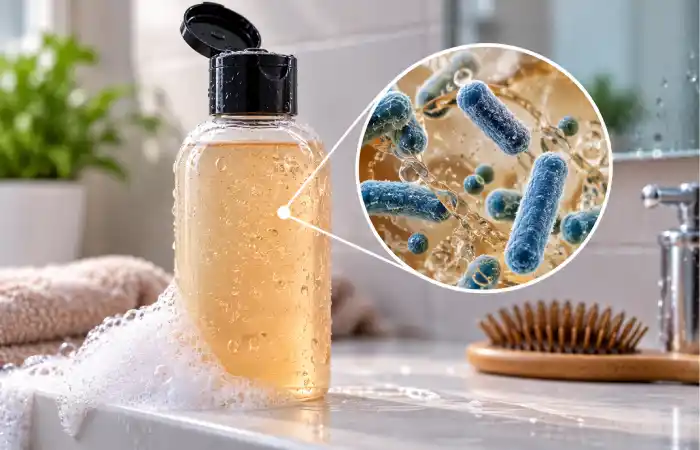
With water and other ingredients, shampoo can provide an environment where microorganisms will grow if manufacturing, storage, preservation or handling controls are ineffective.
Cosmetic manufacturers have systems for preservation, sanitation controls, and microbiological testing to make sure this doesn’t happen.
The Food and Drug Administration points out that cosmetics shouldn’t be manufactured, packed or stored in ways that allow them to become contaminated or unsafe for consumers. That’s why a recall can take place even if only a relatively few bottles are involved- getting rid of a contaminated batch is a precautionary safety precaution.
Which Shampoo Was Recalled Because of Pluralibacter gergoviae?
The most significant 2026 recall was of Oribe Serene Scalp Densifying Shampoo (Made by Kao USA). The FDA said: As a result of its ongoing investigation, Kao USA recalled 8.5 oz. And 33.8 oz. Bottles of Kao USA Oribe Serene Scalp Densifying Shampoo, both with a “Best If Used By” date of 02/26/2026 through 02/21/2026, on July 1, 2026, due to the possible presence of Pluralibacter gergoviae in some lots.
Affected Oribe products
| Product | Affected lot | Size |
| Oribe Serene Scalp Densifying Shampoo | YR010556 | 8.5 oz |
| Oribe Serene Scalp Densifying Shampoo | YR010566 | 33.8 oz |
| Oribe Serene Scalp Densifying Shampoo | YR010576 | 33.8 oz |
This lot number is located on the bottom of the bottle. The FDA has specifically told consumers with the affected product to stop using it. The same three lot numbers were also announced for recall in Canada, which has deemed the recall to be a Class II.
Another 2026 Shampoo Recall: WBeauty Complete Clarifying Shampoo
Impact on a global retailer. This is not the first time an international retailer has been forced to recall a product after bacteria were discovered. In September 2026, Woolworths voluntarily recalled the WBeauty Complete Clarifying Shampoo 250ml after it was also found to contain Pluralibacter gergoviae. SKU number 6009233284823. The South African National Consumer Commission stated that the product is sold at Woolworths stores in South Africa and exported to some neighboring countries. The company said consumers should stop using the product immediately and return the product for a full refund.
What Should You Do If You Have a Recalled Shampoo?
If you discover that your bottle matches an officially recalled lot, don’t panic. The safest approach is simple:
- Stop using the affected shampoo.
- Check the lot number against the official recall notice.
- Keep the bottle and packaging until you know how the manufacturer wants it returned or discarded.
- Contact the retailer or manufacturer about a refund or replacement.
- If you develop unusual symptoms after using a recalled product, contact a healthcare professional.
For people who are immunocompromised, extra caution is particularly warranted because health authorities consider this group potentially more susceptible to infection.
Pluralibacter gergoviae Shampoo Recall vs. Ordinary Shampoo Problems
It is easy to confuse bacterial contamination with a normal reaction to a shampoo. They are not necessarily the same thing.
| Situation | What it may mean | Recommended response |
| Recalled lot | Product may contain microbial contamination | Stop using it |
| Itchy scalp after shampoo | Could be irritation or sensitivity | Stop if symptoms persist and seek advice |
| Unusual odour or appearance | Possible product deterioration or contamination | Don’t continue using it |
| Unaffected lot | Not included in the specific recall | Continue checking official notices for updates |
An unpleasant smell, scalp irritation, or a change in texture does not by itself prove that Pluralibacter gergoviae is present. Laboratory testing is needed to identify a particular microorganism.
Is Pluralibacter gergoviae Dangerous?
It partly depends on the person. The medical risk, as outlined by health officials, for the majority of healthy people has been characterized as being low. But Pluralibacter gergoviae can be an opportunistic pathogen, which is a bug that can cause an infection in susceptible people in certain conditions.
That’s important. Recalling a product does not mean every single person who came into contact with or used that product has been infected. It just means the maker and regulators have determined there may be a product-quality issue that warrants removing a particular product from people’s hands.
How to Check a Shampoo Recall
When you see news about a Pluralibacter gergoviae shampoo recall, don’t rely only on the brand name.
Look at:
- Product name
- Bottle size
- Lot or batch number
- UPC, SKU or barcode
- Country where the product was purchased
- Manufacturing date, when provided
- Official recall date
This is especially important because recalls can be limited to specific production batches.
Final Thoughts
The Pluralibacter gergoviae shampoo recall underscores a reality that we all know at some level – that personal-care products are subject to microbiological control, too. Recent recalls that included several lots of Oribe Serene Scalp Densifying Shampoo and WBeauty Complete Clarifying Shampoo remind us that it’s better to look up lots or codes for individual product rather than avoiding entire brands.