
Many believe that they cannot get pregnant during the first day of their period. Here is why this belief is so tempting. Your period is when the tissue and blood (sloughing off the thick lining of your womb) come out, which is a bit further down the road. But the simple answer is…a little more complicated.
Yes, you can get pregnant on your first day of period – just not as likely as the rest of your cycle. To calculate your chances of conceiving, you need to include your individual cycle length, your ovulation date, your bleed length, and sperm lifespan. So, if you’ve been wondering after a one-night stand without protection, don’t think your period is your safeguard.
Table of Contents
What Happens on the First Day of Your Period?
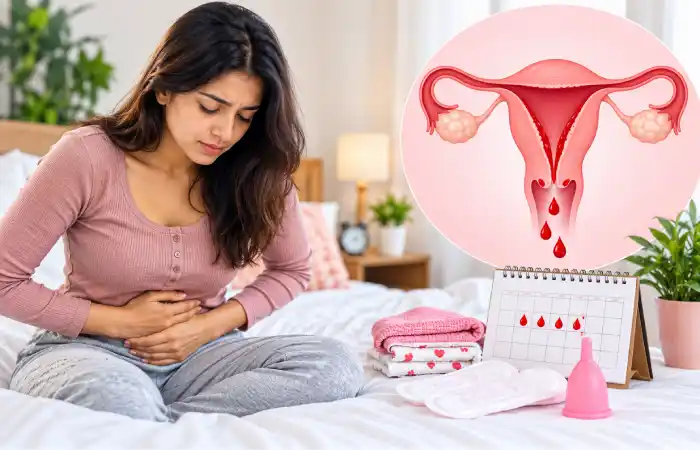
The first day of bleeding in a period is the first day of your new cycle. This is when the lining is shed because you did not conceive during the last cycle. The new cycle has begun at exactly the same time, and the hormones are preparing the ovaries for a new ovulation.
That is basically because your body does not “stop” its fertility just because you’re having a period.
The first phase of the menstrual cycle, aka the follicular phase, starts on the first day of the period and lasts until ovulation. (Or, it begins in your ovaries, which host the developing egg in a follicle). That’s one reason menstrual timing alone isn’t a totally foolproof method of pregnancy prevention.
Can You Get Pregnant on the First Day of Your Period?
It can happen but is generally less likely than conceiving near ovulation.
The primary explanation is that to get pregnant, sperm and egg must be in the right place at the right time. Ovulation will often happen further along in the cycle but doesn’t happen on the exact same date for everyone.
For instance, if someone has a short menstrual cycle and ovulates soon after it starts, the sperm from sex during the period may still be living in the reproductive tract at the time of ovulation.
This is where the calendar can become misleading.
Simple Comparison
| Time of cycle | General pregnancy possibility | Why |
| First day of period | Lower, but possible | Ovulation is usually still some time away, but cycles can vary |
| Later period days | Lower to moderate in some people | Early ovulation can bring the fertile window closer |
| Days before ovulation | Higher | Sperm can survive several days |
| Around ovulation | Highest | An egg is available for fertilization |
| After ovulation | Generally decreases | The egg remains viable for only a short period |
These are general patterns, not guarantees for an individual person.
Why Can Pregnancy Happen During a Period?
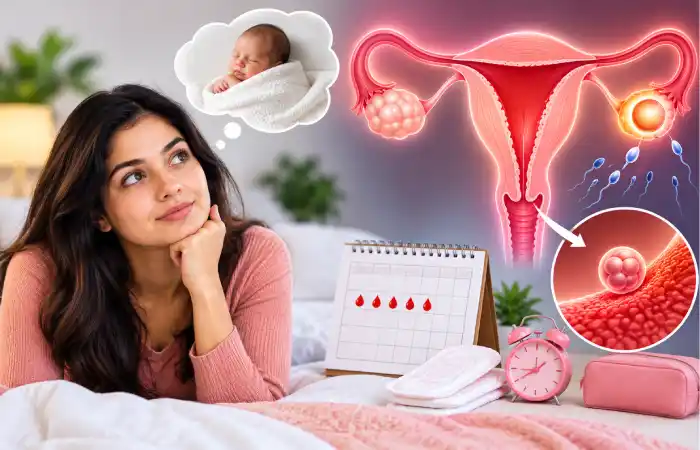
There are two important pieces of the puzzle: ovulation timing and sperm survival.
1. Ovulation Does Not Always Happen on Day 14
You’ve heard that you have sex on day 14. That’s because that’s how it occurs in a normal 28-day cycle. Actual cycles, however, do not always follow this pattern.
How early to ovulate: The NHS says that you normally ovulate 10-16 days before your period. So if you have a short cycle, then you will ovulate earlier than if you have a long cycle.
Stress, sickness, and hormonal changes can also alter the timing of a cycle.
2. Sperm Can Survive for Several Days
Sperm don’t necessarily disappear immediately after intercourse.
Depending on the circumstances, sperm can survive in the female reproductive tract for several days. The NHS notes that sperm can survive for up to seven days, while Cleveland Clinic commonly describes survival of around three to five days.
This means sex on one day and ovulation several days later can potentially overlap.
Suppose a person has sex on the first day of their period and ovulates early. When the egg is released, it is still possible for sperm to fertilize it.
Does a Short Menstrual Cycle Increase the Possibility?
It can.
Suppose someone has a relatively short menstrual cycle and bleeding lasts several days. Their next ovulation may occur sooner than expected.
That creates a smaller gap between menstruation and the fertile window.
This doesn’t mean that everyone with a short cycle will become pregnant from sex during their period. It simply means that using the first day of menstruation as a guaranteed “safe day” isn’t dependable contraception. Cleveland Clinic specifically notes that short cycles and early ovulation can increase the possibility of pregnancy from sex during menstruation.
What If Sex Happens on the First Day of Heavy Bleeding?
You’re on your period. Heavy bleeding does not exclude pregnancy, though; it simply means you’re in your period. There could be minimal to no opportunity for sperm from that session to fertilize an egg if you conceive at a later date, and due to sperm’s 5 days of survival and your fluctuating ovulation, it’s not unlikely that pregnancy can also occur. Menstrual blood volume is not a good indicator for fertility.
What If Your Period Is Irregular?
This is where predicting fertility becomes even harder.
If your periods don’t arrive at predictable intervals, estimating ovulation using a calendar becomes less accurate. A cycle that looks similar for several months can also change.
The NHS explains that determining the fertile period can be difficult because ovulation doesn’t necessarily happen on the same cycle day for everyone.
For someone trying to avoid pregnancy, relying only on the date of the period can therefore provide a false sense of security.
Period Blood vs. Other Vaginal Bleeding
Another key takeaway: not all episodes of vaginal bleeding are actually your period.
Bleeding or noticing bleeding: You notice or see bleeding for different reasons. There might be some people who just think of bleeding as a period when that may not be the case.
This can make a difference in determining if you were pregnant. If the bleeding was not typical, seems to be lighter than usual, or was not at the expected time, then you may want to speak to a doctor.
What If You Don’t Want to Become Pregnant?
Do not use your period as a form of contraception if you want to get pregnant. Contraceptives, IUDs, hormone contraceptives, and condoms are more reliable for preventing pregnancy. When you chart your period, you know where you are in your cycle.
Just because you know when you will be having your period, though, doesn’t mean it isn’t possible to get pregnant.
There is one more reason for using condoms: to prevent STIs.
What If You Had Unprotected Sex on the First Day of Your Period?
No need to panic – but don’t just assume you are fine. If pregnancy is a problem and you want to know about EC, there are several factors that will determine which is the best option for you and when you can take it: a. The method. b. When intercourse occurred.
If your next period is late or you remain concerned about pregnancy, taking a pregnancy test according to the test’s instructions can provide useful information.
Final Thoughts
So, can you conceive on the first day of your period? Sure, it can happen – though it’s less likely. The one thing you need to bear in mind is that your period is a biological process, not an exact calendar year. Ovulation may occur earlier in your cycle than expected; you have a short cycle, or Viagra tablets for a few days can mean that when you have sex can overlap with your fertile window.
If preventing pregnancy is important, don’t assume that the first day of your period is a period free from pregnancy. Knowing about your cycle is good, but effective contraception is more dependable.