


A Parasite-Associated Explosive Diarrhea Outbreak Is Nothing to Fret About, Even If You Have Multiple Cases. It can be a bit scary if there’s an explosive diarrhea outbreak associated with parasites, especially when it’s your local school, town, or work. Parasites can enter your system through the food you eat, the water you drink, the unclean hands you hold and even objects that have been contaminated. Explosive Diarrhea is sudden, severe, liquid bowel movements.
Table of Contents
What Is a Parasite Outbreak?

What leads to a parasite explosion? A parasite explosion is when a specific place or site gets overrun by a parasite infection, with an “overwhelming majority of residents contaminated by the same parasite”, said Nascimento.
Giardia causes diarrhea and can be passed on through contaminated water (including swimming pools), from having unprotected sex, and contact with contaminated stool. Cryptosporidium also causes diarrhoea and can be contracted from contaminated water (including swimming pools) and contact with stool.
Transmission can occur in places with poor hygiene, contaminated drinking water, and contaminated food. Transmission can occur in day care centres, residential accommodation facilities, camps, high-density housing and water parks.
What Does Explosive Diarrhea Mean?
Explosive diarrhoea isn’t a specific medical diagnosis. It describes diarrhea that comes suddenly and may be unusually forceful or difficult to control.
The stool is often loose or watery, and a person may have:
- Frequent bowel movements
- Abdominal cramps
- Bloating or gas
- Nausea
- Urgent bowel movements
- Fatigue
- Loss of fluids and electrolytes
Some parasitic infections cause prolonged diarrhoea rather than a dramatic sudden episode. For that reason, the duration and overall pattern of illness are important clues.
How Parasites Cause Diarrhea
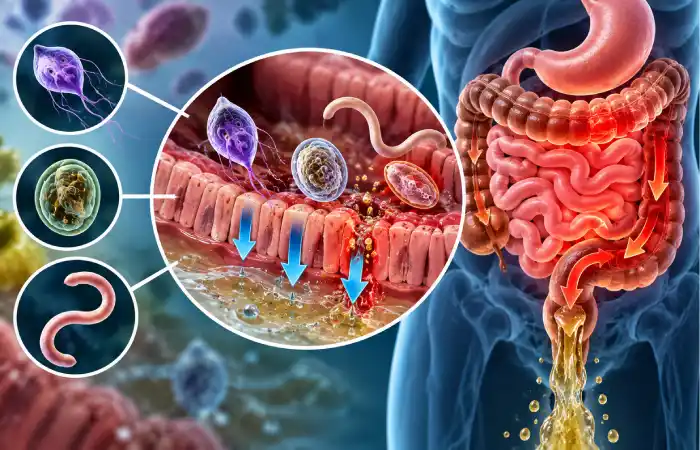
Some intestinal parasites can damage intestinal tissue and cause digestive problems, while others can disrupt normal gut function and impair the absorption of water and nutrients. Giardia, a species, causes diarrhoea, painful sensations in the abdomen, bloated feelings and fatty stool with a horse-like smell – by the way, diarrhoea is watery diarrhoea.
Cryptosporidium is a parasite of the gastrointestinal tract and is one of the most prevalent pathogenic contaminants in the water supply. The parasite has to be introduced into the body to do so.
Common Sources of a Parasite Outbreak
On the other hand, many parasites can transmit disease through consumption of contaminated drinking water, recreational water or ice. Drinking water can be contaminated before it goes into a bottle or cup. Water not treated prior to being placed into a bottle or a cup can also be a mode of transmission. Meanwhile, food can be contaminated during food preparation.
Parasite Infection vs Other Causes of Explosive Diarrhea
Not all cases of explosive diarrhea are due to parasites. Viruses and bacteria can cause similar symptoms and food intolerance and medication side effects, and other GI conditions can cause diarrhea as well.
| Possible cause | Typical clues | How it may spread |
| Parasites | Diarrhoea may persist, with gas, cramps, or bloating | Contaminated water, food, hands |
| Viruses | Sudden vomiting and diarrhoea are common | Close contact, contaminated surfaces |
| Bacteria | Diarrhoea may occur with cramps and sometimes fever | Contaminated food or water |
| Food intolerance | Symptoms often follow a particular food | Not usually contagious |
| Medication-related | Begins after certain medicines | Not contagious |
This comparison is only a general guide. Laboratory testing may be necessary to determine the actual cause.
Warning Signs of Dehydration
The biggest immediate concern with severe diarrhea is often dehydration. The body loses water and electrolytes with every watery bowel movement.
Watch for:
- Very dry mouth
- Excessive thirst
- Dark or unusually small amounts of urine
- Dizziness or weakness
- Unusual sleepiness
- Rapid heartbeat
- Confusion in severe cases
Dehydration can happen more rapidly to babies and young children, senior citizens and people who have certain pre-existing medical conditions. Go to emergency when… Diarrhea lasts for 2 days or longer if you’re an adult; 24 hours or longer if you’re a small child, or you’re passing watery stool.
What Should You Do During a Suspected Outbreak?
When several people develop diarrhoea around the same time, preventing further transmission becomes important.
Drink safe fluids. Oral rehydration solution can be used to replace water and electrolytes. Several spoonfuls of water are easier to deal with than a large amount of water.
Wash your hands thoroughly.
Particularly after going to the toilet and before preparing or eating food.
Avoid preparing food for others while sick.
Clean toilets, bathroom fixtures, and other surfaces that are often touched.
Clean contaminated surfaces. Follow public-health guidance in your area, especially if an outbreak has been reported.
Stay home when appropriate. Follow local public-health advice, particularly when an outbreak has been identified.
It’s important not to think that you should use antibiotics or antiparasitics just because diarrhoea is bad. Here, not all organisms have the same treatment, and some illnesses of diarrhoea can’t be treated with antibiotics.
How Doctors Identify a Parasite
Provide your recent travel, drinking contaminated water or eating contaminated food, recent water, and contact with anyone with disease, swimming history and the length of time you have been sick. Your doctor might do some stool tests if he or she thinks you are suffering from a parasitic infection. A parasite test tests for eggs, cysts, genes, or antigens. Your doctor might want to do multiple stool tests.
When Is Explosive Diarrhea an Emergency?
In most cases of diarrhea, it is mild and usually treated at home with fluid therapy and observation; some cases require more urgent treatment and a doctor should be seen. Consult a doctor if you are severely dehydrated; if your stool contains blood or is black; if you experience severe or worsening pain in your abdomen; if you vomit repeatedly; if you experience dizziness or unconsciousness; or if you have a high fever for a long time.
Final Thoughts
It can easily be passed through contaminated water, food, hands or even objects and surfaces. Really explosive diarrhoea isn’t necessarily caused by a parasite. It may also be caused by viruses, bacteria, drugs or other conditions.
Your last chance to control the spread, your long shot, is to stay hydrated, keep washing your hands, and do your best not to transmit your infection to anyone else. Get medical help if your symptoms are violent and violent. If you get sick, get connected with your neighborhood wellbeing division.