

The goal of psoriasis self-care doesn’t involve looking for the magic home remedy. It’s the practice of developing small, consistent rituals that promote healthy skin, minimize irritation, pinpoint your personal triggers, and assist with medical care when necessary.
Psoriasis is an ongoing chronic skin condition with dry or silvery scaly/or itchy/thick patches of skin. It can influence joints as well as skin, scales on the nails and on the scalp. Psoriasis acts differently on each person, so what may work for someone else doesn’t mean it will work for you.
However, there is good news to be found. A skin care routine, a regular bathing process, avoidance of injuries to the skin, identifying triggering personal factors, and regular moisturizing are all part of effective everyday skin care according to dermatology and its associations.
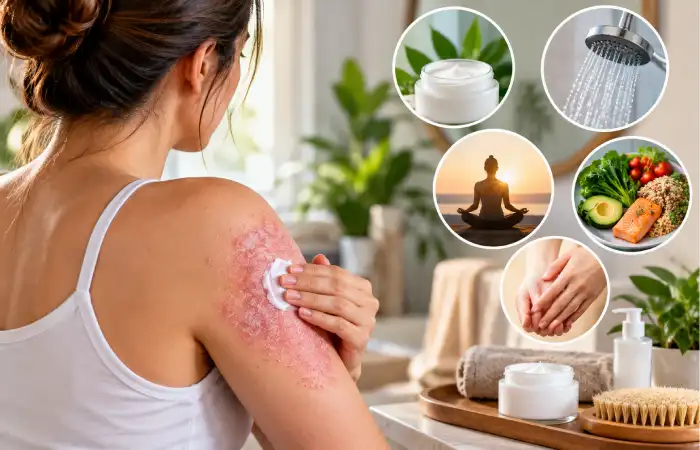

Psoriasis self-care is simply the ways in which you manage your health on a day-to-day basis, dealing with your psoriasis, looking after your skin and taking care of your body. Self-care might involve applying moisturizer to your skin, avoiding harsh products on your skin, protecting your skin from becoming injured and also looking after your physical health through healthy routines, stress reduction and medical treatments recommended to you by the health professional. Self-care is not an alternative to a prescribed psoriasis treatment.
| Self-care habit | Why it can help |
| Moisturizing regularly | Helps reduce dryness and scaling |
| Gentle bathing | Limits irritation and loss of moisture |
| Avoiding scratching | Helps prevent additional skin injury |
| Identifying triggers | May reduce avoidable flare-ups |
| Managing stress | Stress can trigger flares in some people. |
| Healthy lifestyle | Supports overall health and psoriasis management |
Table of Contents
Keep Your Skin Well Moisturized
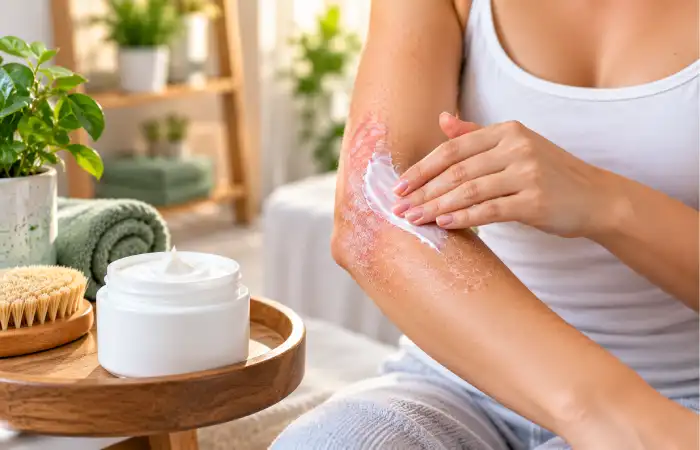
For many people suffering from psoriasis, the moisturizing cream will become one of the most popular of all the products that live in the bathroom cabinet.
Psoriasis causes the skin to become excessively dry and flaky. A good quality moisturizing lotion helps the skin retain water, making the skin appear and feel much smoother and more comfortable. The American Academy of Dermatology suggests a fragrance-free lotion, cream, ointment or even oil, especially when the skin has been particularly dry.
Apply it soon after a bath to hold the water in the skin. A cream can then be re-applied anytime the skin feels dry and tight.
It sounds simple. Shower very gently, pat dry instead of rubbing, and apply a thick amount of moisturizer when the skin is still a little moist.
Make Bathing Gentler
While it seems soothing to stand in a nice, hot, steamy shower, extremely hot water will remove the remaining natural oil from your already dehydrated skin. For psoriasis-prone skin, dermatologists advise the use of warm-not hot-water for much less time than you would otherwise take. Sensitive-skin-safe cleansers are also usually better than fragranced and lye-heavy bar soap and any type of scrubs.
Rubbing your skin harshly with a loofah or a more coarse washcloth should also be avoided, as it will irritate your skin.
Consider bathing as a way to clean your skin without working against its nature. Immediately after stepping out of the water, blot yourself and promptly moisturize your skin.
Don’t Scratch Psoriasis Plaques
When psoriasis bothers you, a most frustrating problem could be itching. Scratching is harmful, and you’re more likely to hurt yourself. It could even worsen the psoriasis itself.
So when that itchy sensation strikes, try another one and try something less damaging.
A cool, wet cloth may temporarily relieve itching, while regular moisturizing reduces dry-skin irritation. You will want to target any underlying causes for itching, which will help in controlling psoriasis. Shorten the fingernails.
Learn Your Personal Psoriasis Triggers
Knowledge about psoriasis and its triggers is one of the most beneficial types of self-care.
A trigger for psoriasis is “a factor that may incite a flare of disease or exacerbate a condition”. Some common factors are: stress, injury to the skin, infection, cold and dry air, smoking, heavy alcohol intake and drugs. Triggers can be very individual, however.
You may wish to try a simple diary. Record when a flare first appears and then try to work backwards as far as possible, in preceding days or weeks. Note major stressers, illnesses, climatic changes, traumas or trauma to skin and drug changes.
The pattern may become easier to identify after time.
Take Care of Your Scalp and Nails
Although commonly thought of as occurring only on the elbows, knees, and other visible areas of skin, psoriasis can also present as:
* Scalp psoriasis: This may present as scaling on the scalp with resulting itching and Discomfort. This means that brushing and styling should be considered quite “gently”.
* Nail psoriasis: Nail psoriasis can be a cosmetic and structural problem. Don’t bite or pick, and avoid forcefully trimming skin around the nails, because cuts may result. Dermatologists advise “hands off” wet jobs, and careful application of moisturizing creams after handwashing.
* Nail changes could be severe and painful, and would be a reason to consult with professionals.
Manage Stress in a Realistic Way
It is not true that every person with psoriasis has stress as a reason for this skin condition, but it can be true for some individuals.
Of course, we want to live a life without any possible stress, but as unrealistic. However, trying to decrease your everyday stress level will be the priority. There are several methods. Daily exercise, good breathing techniques, meditation, yoga, sufficient sleep and connection with people are some suggestions. Sometimes the easiest routine can stick: a simple walk after dinner or 5min of peaceful breathing.
Support Your Overall Health
Psoriasis self-care does not stop with the skin.
These suggestions for maintaining overall good health are perhaps also beneficial in adjunct management of psoriasis: a nutritious, healthy diet, appropriate exercise, controlled stress levels, restricting alcohol consumption and ceasing smoking when appropriate.
There is no “psoriasis diet” applicable to all. If you see restrictive diets or food supplements that are presented as a guaranteed cure for psoriasis, please proceed with caution. Some of the complementary products for psoriasis have only minor evidence, and not everything natural is considered safe.
When Should You See a Doctor?
Self-care can often be effective; however, sometimes treatment from a medical professional is necessary. If your symptoms do not clear up with self-care, and/or are severe or cover a large area of your body, then speak to a doctor, specialist or dermatologist. Depending on your type and severity of the psoriasis, a treatment plan may involve cream and ointment medication, light treatment or other medications taken internally.
It is recommended you talk to a doctor straight away if you develop stiffness, swelling and persistent pain of the joints, as psoriasis has a link to psoriatic arthritis.
A Simple Psoriasis Self-Care Routine
A manageable routine might look like this:
Morning:
Use gentle skin products, moisturize dry areas and protect exposed skin appropriately.
During the day:
Reapply moisturizer when needed, avoid scratching, protect your skin from unnecessary cuts and notice possible triggers.
Evening:
Take a short, warm shower or bath, gently pat the skin dry and apply a fragrance-free cream or ointment.
Every week:
Pay attention to flare patterns, stress levels, weather changes and anything new in your routine.
Final Thoughts
Good psoriasis self-care should not be an elaborate and meticulous operation, but rather treating your skin gently: get moisture in, have your lovely warm showers, don’t traumatize your skin pointlessly, know the causes of your flare-ups, stress management you can actually live with, know that a sensible and correct reaction is simply to obtain better professional help when it’s going wrong again. In the meantime, take comfort in the fact that psoriasis can’t spread, and plaque lesions are definitely not caused by something you should or didn’t do.
Also Read: https://www.lureblog.com